
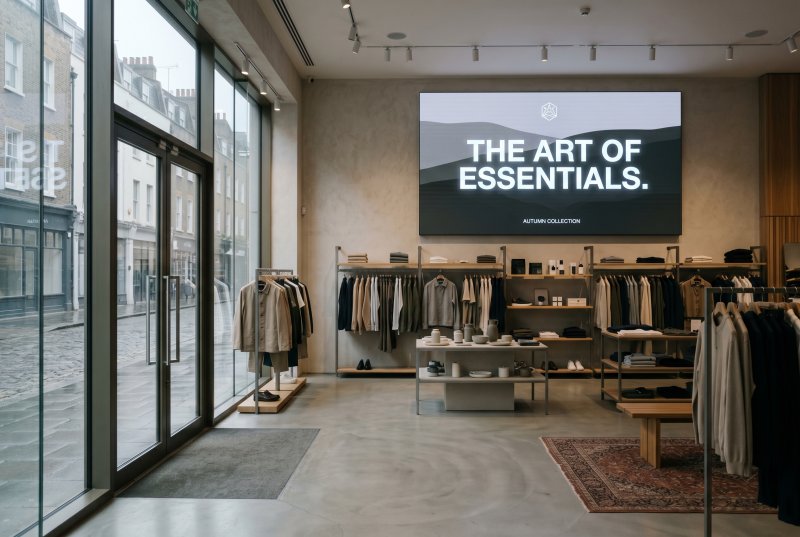
Walk into any Walmart, Target, or Kroger store today and look up. More than likely, you will see a digital screen running branded content. That screen is not just decor. It is a billboard. And the retailer running it is now competing directly with the billboard operator down the street for the same advertising dollar.
This is the retail media revolution, and it is moving faster than most traditional out-of-home operators realize.
The Numbers Nobody in OOH Wants to Talk About
Retail media networks have quietly grown into one of the fastest-growing advertising channels in the United States. Walmart Connect alone is reportedly generating billions in annual ad revenue. Target's Roundel network is expanding. Kroger's data advertising business is signing deals with CPG brands at a pace that would make any billboard sales team envious.
The numbers tell a story that every billboard operator needs to hear.
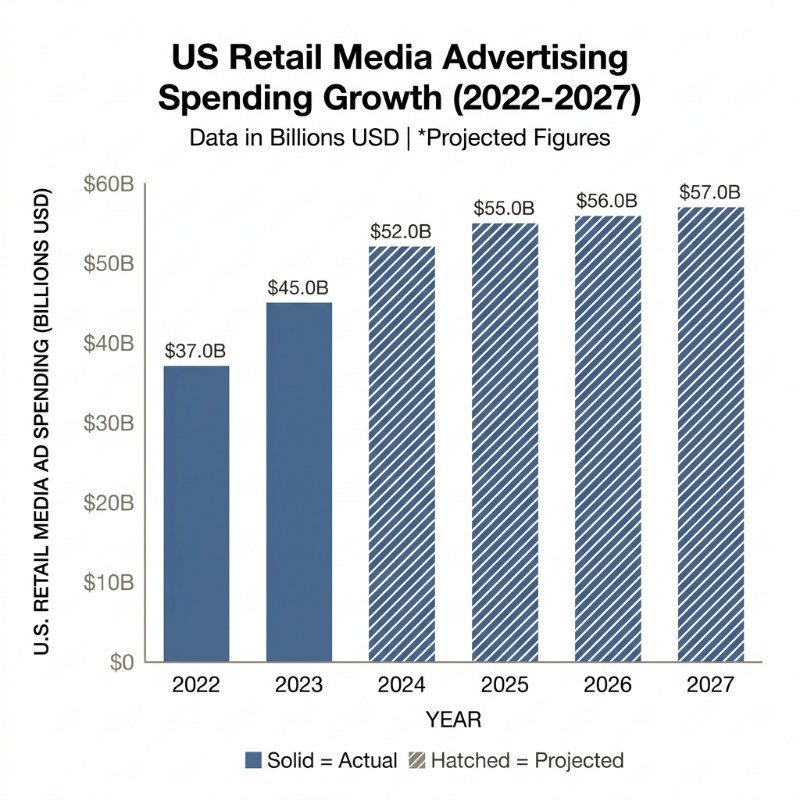
Retail media ad spending in the US is projected to reach $57 billion by 2027, up from roughly $37 billion in 2022. That is not a niche channel. That is a tectonic shift in where brand dollars are flowing.
The reason is simple. Retailers have something billboard operators do not. They have purchase data. They know who is buying what, when, how often, and at what price. That data makes every screen in every store a targeted advertising opportunity, not just a branded interruption.
The Structural Advantage Nobody Can Easily Copy
Traditional out-of-home advertising has always been a awareness play. You put your brand in front of a lot of people and hoped enough of them would remember it when they made a purchase decision later.
Retail media changes the entire equation.
When a brand advertise on a retailer's in-store screen network, they are not just reaching shoppers. They are reaching shoppers at the exact moment those shoppers are already in a buying mindset, standing in the aisle, comparing products. The distance between impression and purchase intent is measured in feet, not miles.
This is the fundamental difference between traditional OOH and retail media. A billboard on the highway reaches you when you are not shopping. A screen in theTarget aisle reaches you when you absolutely are.
For performance-focused advertisers, this distinction is everything. When you can show that your advertising drove a purchase, even an attribution model that is only partially accurate, you can command a premium. Brands are already paying retail media networks premium CPMs that would make traditional billboard rate cards blush.
What This Means for Your Billboard Network
Here is the uncomfortable truth. Every retailer with a digital screen network is now in the DOOH business. They may not be selling national roadside billboard placements, but they are selling advertisers something far more valuable. They are selling proof.
If you run a billboard network and your sales conversations still revolve around reach, frequency, and brand awareness metrics, you are fighting the last war. The retailers are not selling reach. They are selling ROAS, or at least a version of it that looks credible enough to get approved by a brand manager.
This does not mean traditional out-of-home is dying. It is not. OOH still delivers reach at a scale that no retail media network can match. A highway billboard reaches commuters, road trippers, and local consumers in a way that in-store screens simply cannot.
But it does mean the competitive landscape has fundamentally changed. The advertiser who used to split their budget between your billboard and a local newspaper now has a third option. They can put money into a retail media network and get something that looks a lot like measurable performance.
The Path Forward Is Not to Fight Retailers
The operators who are winning in 2026 are not the ones trying to out-retail the retailers. They are the ones who are thinking differently about what their inventory actually offers.
Here is what is becoming clear. Retail media networks thrive in the lower funnel. They work best when a shopper is already deep in the purchase journey, comparing brands on a shelf or considering a repeat purchase. Traditional billboard inventory, especially digital billboard networks, still dominates the upper funnel. Reaching people when they are not actively shopping is a different job, and it is one that retail media cannot do at scale.
The strategic play for billboard operators is to lean into what they do better than anyone else. Wide geographic reach. High-frequency roadside impressions. Contextual placement near retail environments. The trick is to package this in a way that speaks the language of modern advertisers, which means more data, more measurement, and more honest conversation about what OOH can and cannot prove.
Measurement Is the Real Battleground
If there is one thing that separates retail media from traditional OOH, it is the perception of measurability. Retailers can show a brand that a consumer saw their ad in-store and then purchased the product within 48 hours. Even if that link is not always causal, even if the attribution model has significant gaps, the narrative is compelling.
Billboard operators need to meet that moment with their own measurement story. Location data from mobile carriers, foot traffic attribution studies, incrementality testing, and creative exposure frequency analysis are all tools that can help. The operators who invest in building credible, transparent measurement frameworks now will be the ones who can hold their rate cards together as retail media continues to capture more of the conversation.
Final Thought
Retail media is not coming for your billboard business. It is already here, inside every store, running on screens that most operators never even think about as competition. The question is not whether this shift is happening. The question is whether your network is positioned to coexist with it, or whether you are going to keep selling reach in a world that is increasingly paying for proof.
The smart move right now is to understand exactly what retail media networks do well, understand where they fall short, and build your pitch accordingly. There is room for both. There always has been. But only for operators who are paying attention to what is changing around them.
Ready to Modernize Your OOH Operations?
Join the leading OOH media owners who use AdGrid to automate their quoting, manage inventory, and grow their revenue.