
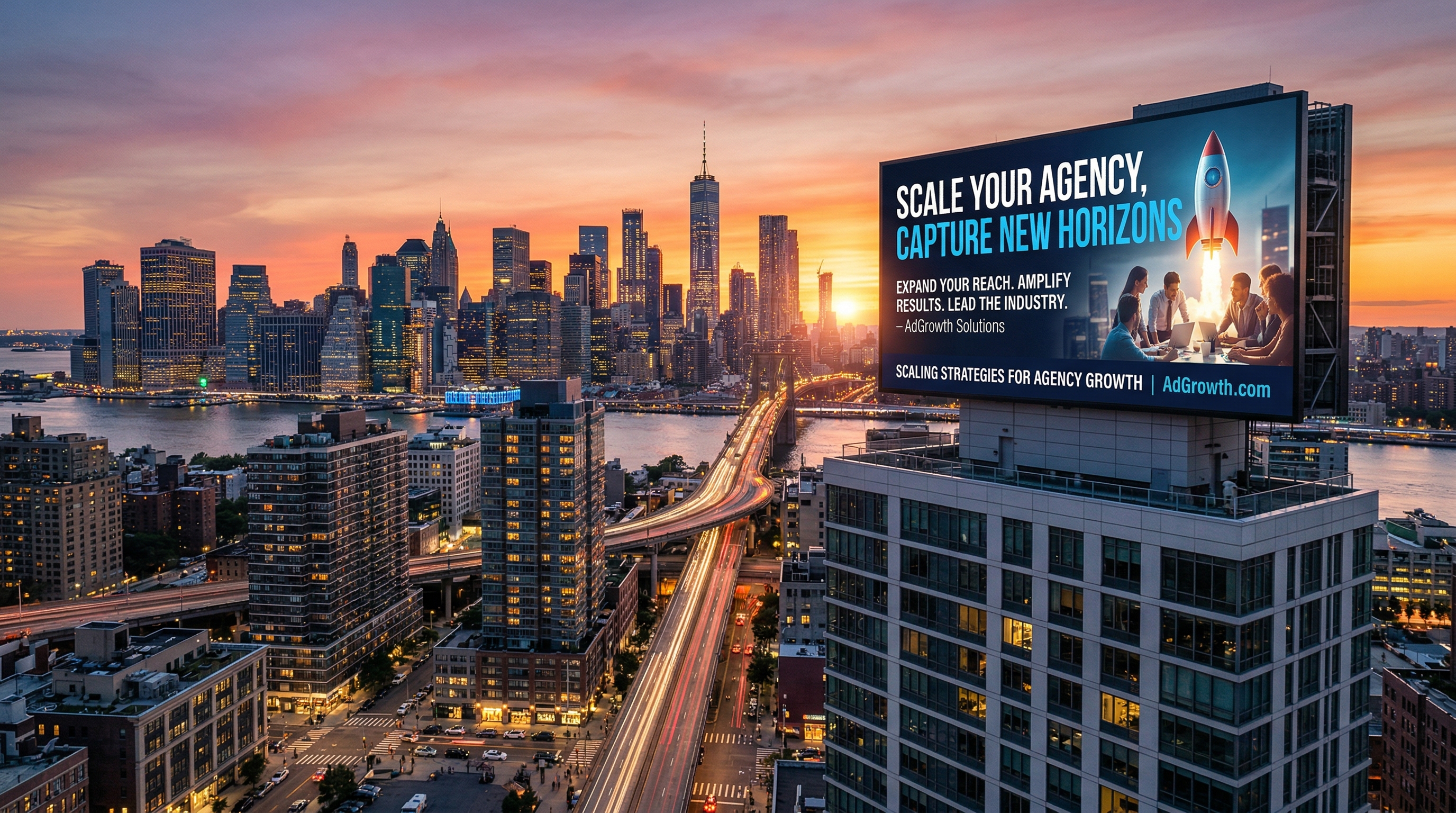
The Out-of-Home (OOH) Scaling Bible: How to Build a Billion-Dollar Agency in the Digital Age
In the world of advertising, Out-of-Home (OOH) is the ultimate survivor. While television fragmented into a million streaming services and digital advertising entered a privacy-induced identity crisis, physical billboards stayed exactly where they were—un-skippable, high-impact, and more relevant than ever.
But for the independent agency owner or regional operator, there is a massive problem. The industry is growing, but your ability to capture that growth is capped. You are hitting a "Scaling Ceiling" made of manual spreadsheets, 48-hour proposal delays, and the constant friction of "checking availability."
If you want to move from a local lifestyle business to a national-grade powerhouse, you cannot do it by hiring more operations staff. You have to build a system.
This is the definitive guide to scaling an OOH agency in 2026.
Part 1: The Invisible Cost of the Status Quo
Most OOH founders start the same way. You have a few great locations, a deep rolodex of local business owners, and a spreadsheet that tracks which board is sold and which is empty.
In the beginning, this works. But as you scale from 10 boards to 100, and from 100 to 1,000, the spreadsheet stops being a tool and starts being a prison.
The Wait Time Tax
In digital advertising, a buyer can launch a campaign in five minutes. In OOH, they often have to wait three days for a proposal. This delay isn't just an annoyance; it's a revenue killer. Every hour that passes between an inquiry and a proposal is an hour where the client’s excitement cools, their budget gets reallocated, or a faster competitor closes the deal.
The Scaling Hire Trap
When things get busy, most owners hire. "I need an ops person to build the maps and check the inventory," they say.
This is a band-aid on a bullet wound. If your revenue growth requires a 1:1 growth in headcount, you aren't scaling—you're just inflating your overhead. True scale is when you can handle 10x the proposal volume without adding a single person to the payroll.
Part 2: Closing the Presentation Gap
The Big Three—Lamar, Outfront, and Clear Channel—don't always have better boards than you. Often, your regional inventory is superior in terms of dwell time and local relevance.
But they have the Presentation Gap.
When a national agency asks for a deck, the giants send a polished, map-based, real-time availability report that looks like it came from the future. If you send back a static PDF or a zip file of photos, you’ve already lost the professionalism battle.
Speed as a Competitive Advantage
As an independent, your weapon is speed. You can make decisions faster than the giants. You can be more flexible. But you can only leverage that speed if your technology allows it. If you can turn around a national-grade proposal in 30 minutes while the giant takes three days, you win.
Part 3: The Tech Stack of the Billion-Dollar Agency
To scale, you need to move your business logic out of people’s heads and into a centralized system. This system must handle three core pillars: Inventory, Visualization, and Availability.
1. Centralized Inventory (The Single Source of Truth)
If your inventory data lives in three different spreadsheets and one person’s brain, you are one resignation letter away from a crisis. Every panel, street view, illumination status, and audience metric must live in a single, searchable database.
2. Map-Based Visualization
Media planners think in maps. If you can't show your inventory in relation to points of interest, commute patterns, and competitor locations, you are speaking a dead language. Automated map generation is the baseline requirement for 2026.
3. Real-Time Availability Tracking
Checking availability should not involve an internal email thread. It should be a single click. When your sales team can see what’s open for Q4 in real-time, they can close deals on the first call.
Part 4: Building a System, Not a Factory
The goal of implementing a platform like Adgrid isn’t just to make maps faster. It's to fundamentally change the role of your team.
- Sales Team: Moves from being order takers to strategic consultants. They spend less time asking for data and more time selling value.
- Operations Team: Moves from proposal builders to growth architects. Instead of manually cropping Google Maps screenshots, they focus on optimizing inventory and expanding the network.
Part 5: The Roadmap to National Buys
If you want national agencies to buy from your regional network, you have to make it easy for them. National planners are overwhelmed. They are handling dozens of markets simultaneously.
If you are the difficult vendor who takes three days to respond and sends messy files, they will skip you every time—even if your boards are better.
The formula for winning national buys is simple:
- Professionalism: National-grade proposals.
- Accuracy: Real-time availability (no double-bookings).
- Speed: 30-minute turnaround.
Conclusion: The Future belongs to the Systematic
The OOH industry is at a crossroads. The operators who continue to rely on manual workflows will be slowly squeezed out by the giants and the tech-forward independents.
The operators who build systems will inherit the market. They will scale faster, run leaner, and capture the national budgets that are currently flowing to the easiest vendors.
Stop running a proposal factory. Start building a scaling engine.
Adgrid is the engine for the next generation of OOH leaders.
Key Takeaways for Owners:
- Audit your Wait Time Tax: How long does it actually take to get a proposal to a client?
- Kill the Spreadsheets: Centralize your inventory before it breaks your business.
- Weaponize Speed: Use tech to out-pace the national giants.
Ready to scale? Book a demo with Adgrid and see the system in action.
Ready to Modernize Your OOH Operations?
Join the leading OOH media owners who use AdGrid to automate their quoting, manage inventory, and grow their revenue.