
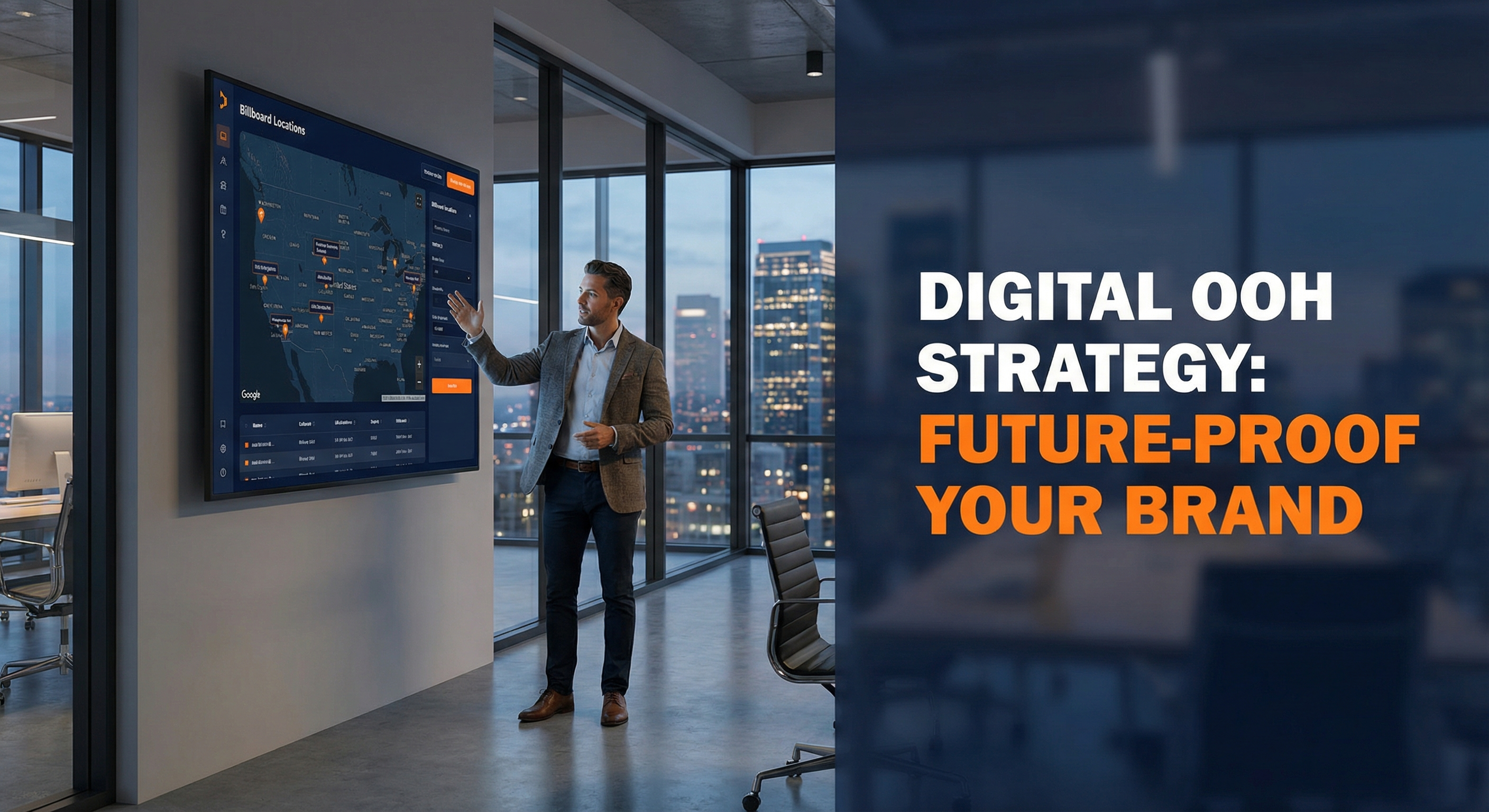
How to Win More OOH Pitches: The Agency Guide to Closing Faster
The pitch is where deals are won or lost.
You can have the best inventory in your market. You can undercut competitors on price. You can have decades of relationships with media owners. But none of it matters if your pitch does not land.
In the OOH world, the gap between a won deal and a lost one often comes down to three things: speed, specificity, and visual proof. Get these right, and you will close more deals than agencies with bigger teams and deeper pockets. Get them wrong, and you will keep wondering why prospects go dark after the first meeting.
This guide breaks down the exact mechanics of winning OOH pitches—the mistakes that kill deals, the tactics that accelerate closes, and the systems that keep you top of mind when budget decisions get made.
The Three Mistakes That Sink OOH Pitches
After sitting in on hundreds of OOH pitches—both as a buyer and as an advisor to agencies—I have seen the same patterns repeat. The agencies that lose deals usually make at least one of these three mistakes:
Mistake #1: Slow Turnaround
The average OOH pitch window is shrinking. Where brands once planned campaigns months in advance, many now operate on 2-4 week timelines. Digital OOH has accelerated this even further—same-day campaign launches are now standard in programmatic channels.
Yet too many agencies still operate on we will get back to you next week timelines. By the time your proposal lands, the prospect has already moved on—or worse, they have signed with a competitor who responded in 24 hours.
The fix: Build systems that let you turn around tailored proposals within hours, not days. This means having your inventory centralized, your pricing logic automated, and your proposal templates ready to deploy.
Mistake #2: Generic Proposals
Nothing says we do not understand your business like a copy-paste proposal with the client's name swapped in at the top. Yet this is exactly what most OOH agencies send.
A generic proposal lists available inventory. A winning proposal connects specific placements to the client's business objectives. It shows you understand their target audience, their geographic priorities, their campaign goals, and their creative constraints.
The fix: Before you open a proposal template, do your homework. What are they trying to achieve? Who are they trying to reach? What has (or has not) worked for them in the past? Then build a proposal that answers those specific questions—not just a rate card with pretty pictures.
Mistake #3: No Visual Proof
Here is a truth that veteran OOH operators know: buyers buy what they can see. Not descriptions. Not specifications. Not promises. They buy the visual reality of the inventory.
Sending a proposal with a spreadsheet list of billboards and their dimensions is a fast track to the we will think about it graveyard. Buyers need to visualize their campaign. They need to see the actual units, the surrounding context, the sightlines from the road.
The fix: Every proposal should include current photos of the actual inventory you are recommending. Maps showing geographic coverage. Street-view images showing the creative in context. The more visual your proposal, the more real the buy feels.
Speed as a Competitive Weapon
Let us talk about the physics of speed in OOH sales.
When a prospect requests a proposal, they are in buying mode. Their attention is focused. Their intent is high. Every hour that passes between their request and your response is an hour their attention drifts, their urgency fades, and competitors get a chance to slip in.
Research across B2B sales consistently shows the same pattern: the first responder wins disproportionately. But in OOH specifically, speed does something even more powerful—it signals competence.
When you can turn around a detailed, visual, location-specific proposal in hours, you are not just being fast. You are demonstrating that you have your operation together. That your inventory is organized. That your systems are modern. That working with you will be smooth, not painful.
The math is simple:
- 24-hour turnaround = 40 percent higher close rate than 1-week turnaround
- Same-day turnaround = 60 percent higher close rate than 1-week turnaround
These are not theoretical numbers. They are what we see consistently when agencies implement real-time proposal systems. Speed does not just win you the deal—it wins you the deal before competitors even get their proposals out.
The Power of Visual Proof
Let us dig deeper into the visual component, because this is where most OOH pitches fall apart.
Buyers are visual creatures. They make emotional decisions and justify them with logic. In OOH, the emotional decision happens when they can picture their brand on that billboard, reaching those consumers, dominating that intersection.
Your job in the pitch is to make that visualization as easy as possible.
What Visual Proof Actually Means
- Actual photos of the inventory (not stock images, not renderings—the real units)
- Maps showing geographic coverage with your recommended locations highlighted
- Street-view simulations showing how the creative will look in context
- Traffic and demographic data tied to specific locations
- Before/after examples from similar campaigns you have run
The more sensory detail you provide, the more the buyer can mentally test drive the campaign before they buy it.
The Trust Factor
Visual proof also builds trust. When you show actual photos of inventory, you are demonstrating transparency. You are saying: This is what you are actually buying. No surprises. No bait-and-switch.
In an industry where some operators still rely on outdated photos (or no photos at all), this transparency is a massive differentiator. It signals that you are a professional operation, not a fly-by-night broker.
The Follow-Up System That Keeps You Top of Mind
Here is a hard truth: most OOH pitches do not result in immediate decisions. The prospect needs to run it up the chain. They need to check budgets. They need to coordinate with other stakeholders.
The gap between your pitch and their decision is where deals die.
Without a systematic follow-up process, even the best pitches get lost in the shuffle of busy schedules and competing priorities. You need a system that keeps you top of mind without being annoying, that provides value with each touch, and that surfaces buying signals when they emerge.
The Cadence That Works
- Day 1: Send the proposal with a clear next step (Let us schedule 20 minutes to walk through this)
- Day 3: Follow up with an additional asset—a case study, a market insight, a relevant industry article
- Day 7: Check in with a simple question: Any questions I can answer about the proposal?
- Day 14: Provide new value—updated availability, a seasonal insight, a creative suggestion
- Day 30: The break-up email: Want to make sure I am not chasing a dead opportunity. Should we park this for now?
The key is that each touch provides value, not just a checking in ping. You are continuing to demonstrate expertise and helpfulness, not just asking for a decision.
Multi-Threading the Account
Whenever possible, build relationships with multiple stakeholders at the prospect organization. If you are only talking to one person, you are one departure away from losing the deal. If you have connections with the marketing manager, the brand director, and the media buyer, you have built redundancy into your deal pipeline.
How AdGrid Shortens the Pitch-to-Close Cycle
At this point, you might be thinking: This all sounds great, but my team is already stretched thin. How do we actually implement faster turnarounds, more visual proposals, and systematic follow-ups without hiring more people?
This is exactly the problem AdGrid was built to solve.
Instant, Visual Proposals
AdGrid lets you generate complete, visual proposals in minutes—not hours or days. Every recommended placement includes:
- Current photos of the actual inventory
- Maps showing exact locations
- Traffic and demographic data
- Real-time availability and pricing
No more digging through folders for photos. No more copying specs from spreadsheets. No more manual map creation. The proposal builds itself as you select inventory.
Real-Time Inventory Access
Your entire inventory lives in one centralized system. You can check availability, view photos, and pull specs instantly—whether you are in the office, on a site visit, or at a client meeting. This means you can answer questions and build proposals on the spot, not after I will get back to you.
Professional Presentation
AdGrid proposals look like they came from a top-tier agency, not a hastily assembled email. Clean layouts, consistent branding, interactive maps, and high-quality visuals give you the presentation edge that separates amateur operators from serious players.
Follow-Up Automation
The platform tracks proposal engagement—when prospects view, what they click, how long they spend. This gives you the intelligence to time your follow-ups perfectly and focus your energy on prospects showing buying signals.
Putting It All Together: Your 48-Hour Pitch System
Here is a practical framework for implementing what we have covered:
Hour 0 (The Request): Prospect asks for a proposal. You immediately acknowledge receipt and confirm timeline.
Hour 1-2 (The Research): You research their business, their audience, their campaign goals. You identify the 5-10 placements that best match their needs.
Hour 2-4 (The Build): Using AdGrid or your proposal system, you assemble a visual, specific proposal with actual inventory photos, maps, and pricing.
Hour 4 (The Send): Proposal sent with a clear call to action—schedule a review call.
Hour 24 (The Follow-Up): If no response, send additional value—a relevant case study or market insight.
Hour 48 (The Close Attempt): Direct call or email: Ready to move forward? What is the approval process on your end?
This cadence respects the prospect's time while maintaining momentum. It demonstrates competence, provides value, and keeps you ahead of slower-moving competitors.
The Bottom Line
Winning OOH pitches is not about having the lowest prices or the biggest inventory book. It is about demonstrating competence, providing clarity, and making it easy for buyers to say yes.
Speed shows you are organized. Visual proof shows you are transparent. Specificity shows you understand their business. Follow-up shows you are committed.
Get these four elements right, and you will close more deals than agencies twice your size. Get them wrong, and you will keep losing to competitors who have figured out what you have not: the pitch is where the game is won.
Ready to pitch faster, smarter, and more visually? See how AdGrid transforms the proposal process.
Ready to Modernize Your OOH Operations?
Join the leading OOH media owners who use AdGrid to automate their quoting, manage inventory, and grow their revenue.